
 English
Views: 0 Author: Site Editor Publish Time: 2025-12-16 Origin: Site


Choosing the right surveying tool can make or break the accuracy of your project. But when it comes to precision, which one should you choose: the optical alidade or the digital theodolite?
In this article, we will dive into the features, advantages, and potential drawbacks of both tools. By the end, you'll know which one suits your surveying project best.
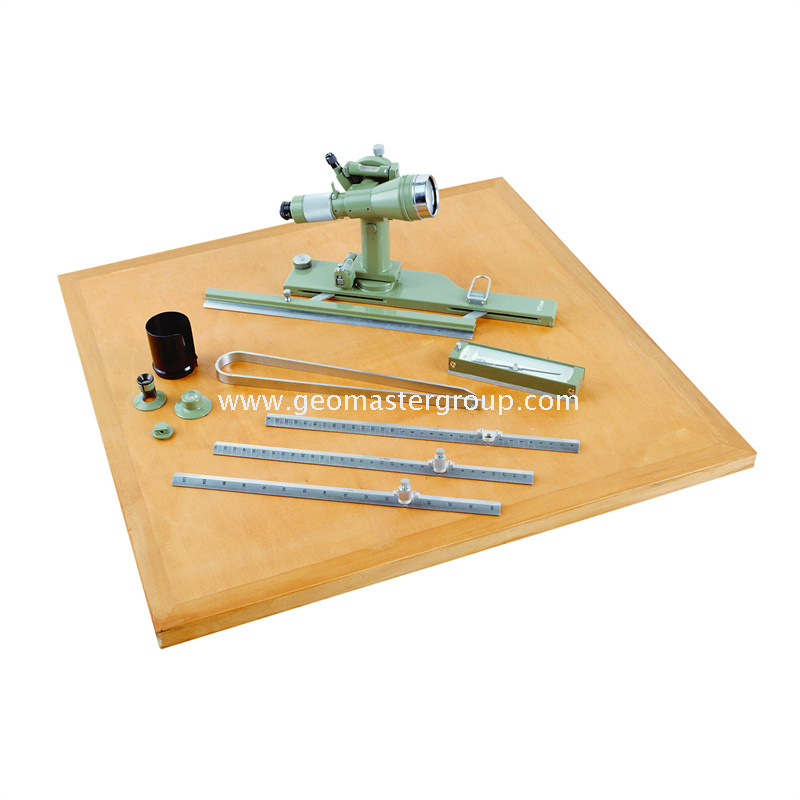
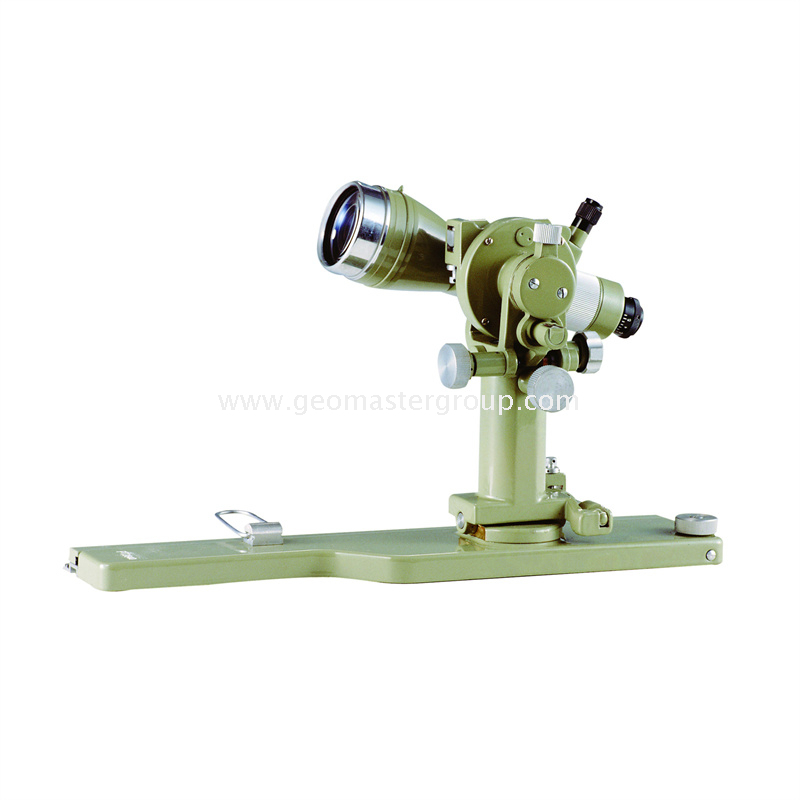
An optical alidade is a simple yet effective tool used primarily for surveying and navigation. It consists of a sighting tube and a graduated scale, allowing surveyors to measure horizontal angles. Historically, it has been used in land surveys, topographic mapping, and boundary demarcations.
The optical alidade operates mechanically, relying on the surveyor’s ability to visually align the tool with specific landmarks to measure angles.
The optical alidade has several key features:
● Simplicity: It is a straightforward tool with no electronic components.
● Portability: Due to its lightweight design, it is easy to carry and set up.
● Manual operation: The user must visually align the instrument and manually read the scale to determine the angle.
These features make the optical alidade a practical choice for fieldwork in remote or rugged areas where simplicity and durability are more important than advanced technology.
● Cost-Effective: The optical alidade is generally more affordable than digital alternatives, making it a good choice for budget-conscious projects.
● Reliability: With fewer moving parts and no reliance on batteries or electronics, it can be used in a wide range of environmental conditions.
● Durability: The mechanical nature of the tool means it can withstand harsh conditions and is less likely to break down.
● Precision Limitations: The manual reading process makes the optical alidade less accurate than digital tools.
● Time-Consuming: The need for manual alignment and reading means it can take longer to complete surveys, especially for large projects.
● Steeper Learning Curve: Beginners may find it difficult to align the instrument accurately, affecting the overall efficiency of the surveying process.
Feature | Optical Alidade | Digital Theodolite |
Precision | Lower precision | High precision |
Automation | None | Automated readings |
Ease of Use | Simple but manual | User-friendly, requires training |
Cost | More affordable | More expensive |
Portability | Highly portable | Less portable but still manageable |
Maintenance | Minimal | Requires calibration and maintenance |
A digital theodolite is a modern surveying instrument that uses digital technology to measure angles precisely. Unlike the optical alidade, it has an electronic display and often features automated functions for enhanced accuracy and efficiency. The digital theodolite is a staple in large-scale construction, engineering projects, and complex surveying tasks.
● Digital Display: Provides clear, precise angle readings without the need for manual interpretation.
● Automation: Many models have features like angle storage, automatic targeting, and data logging.
● Advanced Integration: Modern digital theodolites often integrate with GPS, software, and other survey instruments for enhanced functionality.
The digital theodolite is designed for surveyors who need high-accuracy measurements and who require efficient data management.
● High Precision: Digital theodolites provide more accurate and repeatable measurements than optical alidades.
● Ease of Use: The digital display simplifies angle readings, reducing the potential for human error.
● Time-Saving: Automated features and digital storage save time during surveying, especially for large or repetitive tasks.
● Data Integration: The ability to integrate with GPS and software makes data management and analysis easier.
● Higher Cost: The digital theodolite is significantly more expensive than the optical alidade, both in terms of initial purchase and ongoing maintenance.
● Complexity: More advanced features may require specialized knowledge and training to use effectively.
● Maintenance: Digital instruments are more likely to require calibration and maintenance, particularly if exposed to harsh conditions.
While both tools measure angles, the digital theodolite excels in precision. Its electronic components allow for finer adjustments, providing more accurate readings. The optical alidade, on the other hand, relies on manual alignment, which can introduce minor errors.
For example, in a project where highly detailed measurements are crucial (e.g., large infrastructure projects), the digital theodolite would be the clear winner due to its high accuracy and ability to store and process data. In contrast, the optical alidade would still perform well for simpler tasks, such as boundary surveys on smaller land plots, where precision is less critical.
The optical alidade is generally easier for beginners to use due to its simple design. However, it requires careful sighting and manual angle reading, which can be challenging for users without prior experience.
On the other hand, the digital theodolite is designed to be user-friendly, with clear digital readings and fewer manual steps. However, there is a learning curve associated with its more complex features, especially for those new to digital surveying equipment.
Tip: If you're new to surveying and need a tool for smaller projects, an optical alidade might be easier to learn. For larger projects, the digital theodolite's precision and automation will save you time and effort.
The optical alidade is much more affordable than the digital theodolite. If you're working with a limited budget or only need to measure basic angles, the optical alidade is a cost-effective choice.
However, if you're planning a large-scale project where precision and efficiency are paramount, the digital theodolite's higher price can be justified by the time and accuracy it offers.
If your project is relatively small and requires minimal precision, the optical alidade provides a great balance of affordability and functionality.
For large, complex surveying projects that demand high accuracy, digital theodolites are worth the investment. They streamline data collection, reduce human error, and improve efficiency, making them ideal for modern construction or engineering projects.
Application Area | Optical Alidade | Digital Theodolite |
Small-Scale Land Surveys | Ideal for simple tasks | Not necessary for small tasks |
Large-Scale Construction | Not recommended | Excellent for large projects |
Topographic Mapping | Suitable for basic surveys | Best for detailed, large maps |
Boundary Marking | Suitable for small plots | Not typically used |
The optical alidade is ideal for projects that involve simple measurements in remote areas, where high-tech equipment may not be necessary. It is perfect for topographic surveys that require basic angle measurements for mapping terrain, especially when working in challenging environments with limited access to advanced tools. Boundary marking is another common application, where surveyors need to identify property lines or land divisions with sufficient accuracy. Additionally, the optical alidade is often used in historical mapping or archaeological surveys, where the focus is on accuracy in smaller areas, and the simplicity of the tool helps in both fieldwork and transport. Its affordability and ease of use make it a go-to option for such straightforward surveying tasks.
For modern, high-precision tasks such as large construction projects, engineering surveys, or any job requiring integration with other tools, the digital theodolite is a superior choice. It offers exceptional accuracy and automation, reducing human error and saving valuable time. With its advanced features, like digital displays and data integration capabilities, it simplifies complex measurements and enhances productivity. Whether you're working on infrastructure development, mapping large land areas, or coordinating with other survey instruments, the digital theodolite ensures precise and reliable results, making it indispensable for projects that demand top-tier performance.
In this article, we compared the optical alidade and the digital theodolite, discussing their features, advantages, and limitations. The optical alidade is cost-effective and simple, while the digital theodolite offers higher precision and automation. Depending on your project's scale and accuracy needs, one tool may be more suitable than the other. Companies like Tianjin Geochoix Equip Sales Ltd offer reliable surveying equipment, providing tools that combine precision and ease of use for your surveying projects.
A: An optical alidade is used to measure horizontal angles in surveying. It relies on visual alignment and a graduated scale to take readings, making it ideal for simple surveys.
A: A digital theodolite offers higher precision and automated features compared to the optical alidade, which is more manual and basic.
A: The optical alidade is a cost-effective choice for smaller projects or fieldwork where high precision is not crucial.
A: While it can work for large projects, the optical alidade may lack the precision needed for complex or large-scale surveying tasks compared to digital tools.
A: Yes, for large, high-precision projects, a digital theodolite’s accuracy and automation make it a worthwhile investment.