
 English
Views: 0 Author: Site Editor Publish Time: 2025-12-19 Origin: Site


What if you could measure angles with incredible precision using just a simple tool? The optical alidade has been a key instrument in surveying for centuries. In this article, we’ll break down what an optical alidade is, how it works, and its importance in modern surveying practices. You’ll learn about its components, advantages, and practical uses.
An optical alidade is a type of instrument used for measuring horizontal and vertical angles in surveying. It works by providing a line of sight over a distance, enabling the user to determine the angles between objects or locations. The optical alidade uses a sighting system and a scale to help surveyors make accurate measurements.
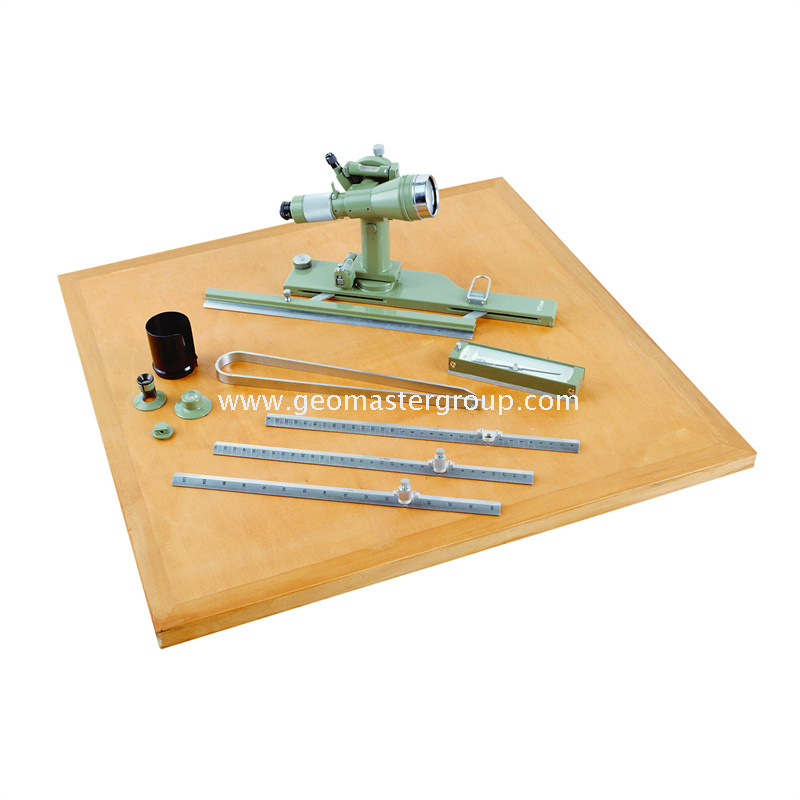
The concept of an optical alidade dates back to ancient times. Early versions of this instrument were rudimentary, often relying on basic optics and simple sighting methods. However, as technology advanced, optical alidades became more sophisticated, incorporating precise mirrors and telescopes to improve accuracy. These improvements made it a standard tool in land surveying, mapping, and navigation.
An optical alidade is made up of several key components that work together to ensure accurate and reliable measurements. These components are designed for ease of use and precision, making the optical alidade an essential tool for tasks such as surveying, mapping, and construction. Here’s a breakdown of the key parts:
● Sight Tube or Telescope: =The sight tube or telescope is the primary component used to look at the target. It allows the operator to align the instrument with the target, making it easier to measure angles with great accuracy. This component ensures that the instrument stays aligned with the object or reference point during the entire measurement process.
● Vertical and Horizontal Scales: These scales are crucial for measuring the angles of the target. The vertical scale is used to measure angles along the vertical plane, while the horizontal scale measures angles along the horizontal plane. Together, they help determine the precise position and orientation of the target in relation to the observer.
● Micrometer or Vernier Scale: To achieve even more precise readings, optical alidades often include a micrometer or Vernier scale. These fine measurement scales allow the user to take smaller, more accurate angle readings, which is especially important for high-precision tasks in surveying and mapping.
● Base or Mounting: The base or mounting provides stability to the optical alidade. It holds the instrument steady and allows it to pivot smoothly for angle measurements. A solid and stable base is essential to ensure that the measurements are not affected by the slightest movement or vibrations.
● Crosshairs or Reticle: Located inside the sight tube or telescope, the crosshairs or reticle help with alignment. These thin lines inside the sight tube assist the operator in aligning the instrument’s focus with the target, ensuring accuracy in the measurement process.
Each of these components plays an integral role in the functionality of the optical alidade. Together, they allow the instrument to provide precise angle readings, ensuring its effectiveness in various surveying applications such as topographic mapping, construction layout, and land surveying. With these key components working in unison, the optical alidade offers both accuracy and reliability.3. How Does an Optical Alidade Work?
An optical alidade works by using sighting optics to measure the angle between a known point and an unknown point. The surveyor aligns the instrument to the point of interest and reads the corresponding angle off the scale. The process is essentially about transferring angles onto a flat scale for accurate measurement.
1. Set up the instrument: Begin by placing the optical alidade on a stable surface, such as a tripod or fixed mount. This ensures that the instrument remains steady while taking measurements, providing more accurate results.
2. Align the sighting system: Next, aim the alidade’s sighting system at the object or point whose angle you wish to measure. Ensure the instrument is aligned properly to avoid any measurement discrepancies.
3. Take a reading: Look through the telescope or sight tube. Align the reticle (crosshairs) with the object or reference point in your line of sight. Once aligned, read the angle from the vertical or horizontal scale. This reading will give you the angle measurement needed for your task.
4. Repeat as necessary: The optical alidade’s simple operation ensures it’s both a powerful and versatile tool, especially for tasks like topographic surveying and construction layout.
5. The optical alidade’s simple operation makes it an invaluable tool for tasks like topographic surveying, land mapping, and construction layout. Whether you're measuring angles for surveying or aligning structures for construction, the alidade’s ease of use and versatility provide consistent and reliable results.
Optical alidades are crucial for creating detailed topographic maps. Surveyors use them to measure land features, boundaries, and elevations with remarkable precision. These measurements are then used to create accurate maps that guide decisions on construction, infrastructure development, and land management.
Type of Alidade | Key Feature | Best Use |
Manual Optical Alidade | Manual operation, basic angle measurement. | Traditional surveying with basic needs. |
Digital Optical Alidade | Includes digital display for easier angle reading. | Surveying with an emphasis on precision and ease. |
Electronic Theodolite | Offers automated measurements and advanced features. | High-end projects requiring high-speed measurements. |
Optical alidades are primarily used in land surveying to measure angles between different points. Surveyors use them to calculate distances, boundaries, and elevations. The precision of optical alidades ensures that the data collected can be relied upon for high-stakes projects such as property development, urban planning, and environmental assessments.
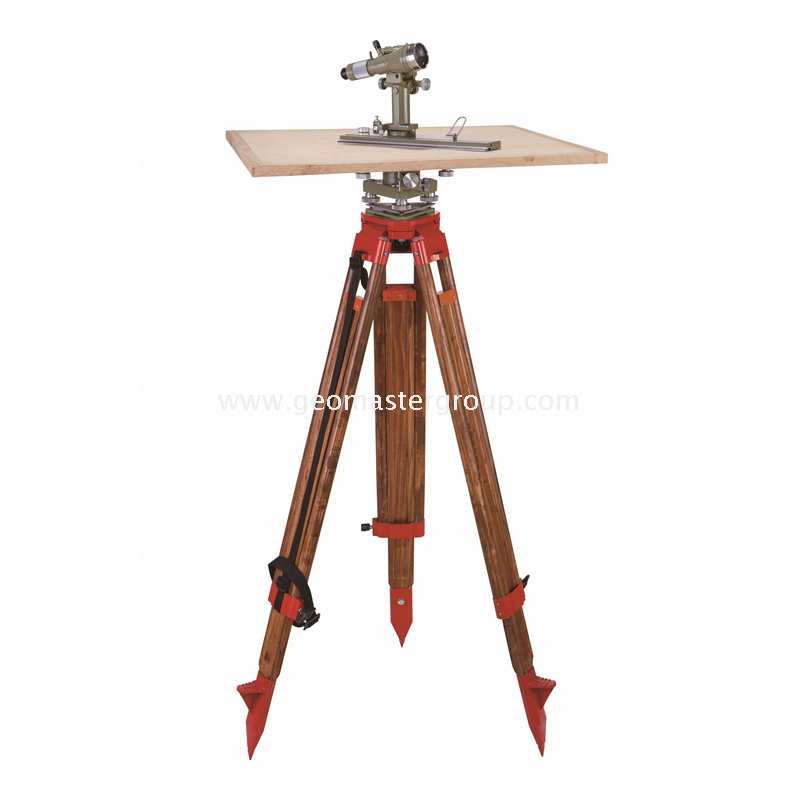
In geodesy, optical alidades are used to measure large-scale land features and to monitor earth movements. Geodetic surveyors rely on these tools to collect data for mapping continents, measuring mountains, and even assessing changes in the earth's crust. The accuracy and reliability of optical alidades make them ideal for long-term measurement projects.
While optical alidades are more commonly used on land, they also have applications in maritime and aviation navigation. In these settings, they are used to measure the angle between the vessel or aircraft and known landmarks, allowing for accurate navigation over long distances.
One of the main reasons why optical alidades are still used today is their exceptional accuracy. Unlike digital devices that can be prone to malfunctions, optical alidades use simple mechanical and optical systems that, when properly calibrated, deliver precise results. This makes them ideal for tasks that require high levels of detail and accuracy.
Optical alidades are built to last. Their simple design, combined with durable materials such as brass and stainless steel, makes them resistant to wear and tear. In harsh field conditions, such as extreme temperatures or wet environments, optical alidades continue to perform reliably, provided they are maintained correctly.
Compared to more advanced digital surveying equipment, optical alidades are relatively inexpensive. They don’t require the same level of technical expertise to operate or maintain, making them an affordable solution for both small-scale and large-scale surveying projects.
While optical alidades are versatile, they do have some limitations. In environments where visibility is poor, such as foggy or rainy conditions, the instrument can be less effective. Additionally, their reliance on manual readings can introduce human error, which might affect the overall precision of measurements.
Modern digital instruments such as total stations have started to replace optical alidades in many areas. These instruments provide more automated features, faster data collection, and greater accuracy. However, optical alidades still have the advantage in terms of simplicity, cost, and longevity.
An optical alidade is a crucial tool in surveying, providing precise angle measurements for accurate mapping. This tool works by utilizing a sighting mechanism and a graduated scale to determine angles. It is widely used in geodesy, construction, and navigation. Tianjin Geochoix Equip Sales Ltd offers reliable optical alidades, known for their durability and accuracy, supporting effective surveying operations.
A: An optical alidade is a surveying instrument used to measure horizontal and vertical angles, commonly used in land and geodetic surveys.
A: The optical alidade works by sighting an object through a telescope, measuring the angle with a scale, and using this data to determine distances or boundaries.
A: Optical alidades are critical for ensuring precise measurements in surveying, contributing to accurate maps and land assessments.
A: The advantages include accuracy, durability, and cost-effectiveness, making it a reliable tool for various surveying tasks.
A: Digital instruments offer more advanced features, but optical alidades remain preferable for their simplicity, durability, and affordability in many surveying tasks.